
India's leading agriculture commodity exchange, the National Commodity & Derivatives Exchange (NCDEX), has decided to acquire around a 20 per cent stake in a new commodities and financial derivatives exchange being set up in Sri Lanka, subject to regulatory and governmental approvals. The move aims to deepen NCDEX's footprint in the financial ecosystem of its neighbouring country.

Indian refiners are diverting 350,000 tonnes of sugar, originally slated for export, to the domestic market to ease a supply crunch and stabilise prices ahead of the festive season.

The National Stock Exchange (NSE) will launch Dated Brent Crude Oil (Platts) futures on April 13, offering a new hedging tool for market participants.

Most active traders prefer mobile applications that provide real-time alerts, including price targets -- functions that dealers once delivered through client calls.

'Market momentum and investor interest are at unprecedented levels, making this the opportune moment.'

In a memorandum to the Finance Minister, the exchanges said that FM's proposal to impose the Commodities Transaction Tax (CTT) will ruin the budding commodity futures business in India. In its arguments, it said CDM is at a nascent stage. It is only 4 years old. Participation of banks, mutual funds, FIs, FIIs is still not allowed. Options contracts, index futures & futures based on intangibles are still to come. Cost increase in India will induce hedgers to global exchanges.
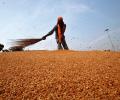
According to the Sebi circular, commodities that require price control measures will be less conducive for the derivatives market.

The National Stock Exchange (NSE) on Monday said it will conduct a special Muhurat trading session on Tuesday, October 21, to mark the festival of Diwali.
It has been three years since it has been opened to retail investors, but few have taken to it. A primer for those prepared to dive in to find the pearls.
According to officials, after launching sugar successful on its electronic platform, NCDEX Spot has decided to go in for more commodities.
Declining volumes in agriculture commodities are prompting the commodity bourses to aggressively focus on futures trading in bullion, metals and energy products.
India's leading agri commodities bourse - the National Commodity and Derivative Exchange - has asked the government to permit banks to hedge at domestic commodity exchanges like international bourses.
Experts like National Commodity and Derivatives Exchange Managing Director and CEO P H Ravikumar feel that the commodities market will steal the thunder in the coming days. The next bull run is not in stocks but in commodities, he said.
In Indian context, among top gainers on the spot National Commodity and Derivatives Exchange, is coriander that saw its price moving up nearly 38 per cent (year-to-date, or YTD).

It will be the first to go, in what has become an overcrowded segment since India first allowed futures trading in commodities in 2003.

While NSE is exploring 8-10 new agri-commodities, BSE is eyeing as many as 15, most of which aren't traded on any other online derivative exchange in India.

Kotak Group-promoted ACE Derivatives and Commodity Exchange Limited on Wednesday said it has received the final license for launching a national multi commodity exchange from the government.

Capital markets regulator Sebi has rejected a proposal by the National Stock Exchange (NSE) to extend the trading hours in the equity derivatives segment citing a lack of feedback from the stock brokers community. "Currently, there is no plan to extend the timings as Sebi has returned our application as the stock brokers have not given the feedback that Sebi wanted. "So, as of now, the extended time frame (plan) is shelved," NSE MD and CEO Ashishkumar Chauhan said in a post-earnings analysts call.

Metropolitan Stock Exchange of India (MSE) plans to raise Rs 120 crore from investors in an attempt to stay afloat. The beleaguered exchange's board has approved issuance of 1.19 billion equity shares of face value Rs 1 at a premium of Rs 1 through private placements, according to a disclosure on its website.

National Stock Exchange (NSE) chief Ashishkumar Chauhan on Friday cautioned retail investors against trading in derivatives and suggested them to invest in equities through mutual fund route. He emphasized that trading in Futures & Options (F&O) derivatives should be limited to informed investors who can manage risk and comprehend the market. Recently, Finance Minister Nirmala Sitharaman and chief economic advisor V Anantha Nageswaran flagged the growing risk of F&O trading for retail investors.

Karvy group's commodity broking arm, too, is facing a liquidity crisis because of some issues related to NCDEX, said people in the know.
The higher margins imposed on pepper in the wake of volatiluity in the commodity's prices by the Forward Markets Commission is likely to reduced soon.

A dedicated physical gold exchange could lead to standard gold pricing in India.
The Bombay Stock Exchange and Foreign Exchange market will remain closed today due to a terrorist attack in Mumbai.
The move comes nearly a month after it acquired five per cent in the National Stock Exchange.
Intercontinental Exchange, which trades in energy derivatives, is in talks to buy ICICI Bank's holding in the National Commodities and Derivative Exchange.

The National Stock Exchange (NSE) has withdrawn its decision to change the expiry day for Bank Nifty derivatives contracts from Thursday to Friday. The move follows a "request" from the BSE, which settles its Sensex and Bankex derivatives contracts on Friday. The proposed change in Bank Nifty settlement was scheduled to be effective from July 6 with the first weekly expiry on July 14.
.jpg)
In most developed markets, there are reporting agencies for spot markets and generally deals took place on the over-the-counter market.
In an effort to boost commodity trading in the country, the much-awaited amendments to the Forward Contract and Regulations Act of 1952 will happen during the Budget session of the Parliament.

After a gap of more than 13 years, the National Commodity and Derivatives Exchange (NCDEX) is all set to launch a futures contract in groundnut (in shell) to fill a void in oilseeds complex futures because of a ban in several high-volume commodities.
India's good old 'mandis' are all set to make way for swanky spot exchanges soon. In two months' time, winds of change will sweep across the country's agricultural sector with the launch of electronic spot exchanges.
The Central government's decision to ban futures trading in several commodities has not deterred the firms from going in for a big awareness drive in Punjab, India's wheat bowl.
The National Commodity and Derivatives Exchange Ltd has launched a web based e-learning platform on it portal to provide a wide array of information to farmers and other commodity market participants.
In its order that rejected a proposal by NCDEX to slash the transaction charges in its evening session of trade, FMC said the exchange's settlement guarantee fund has fallen to meagre Rs.5.05 lakh at the end of calendar year 2008. Performance audit done by the auditors at the behest of FMC shows that the exchange also earned an interest of Rs.24.87 crore on this fund during March 2004 to March 2006.

With equity and commodity exchanges allowed to enter each other's areas from October, brokerages are pump-priming their businesses to allow their clients seamless trading in commodities and equities.
India's commodity bourses -- Multi-Commodity Exchange and National Commodity and Derivatives Exchange -- are gearing up to launch futures trading in carbon credits.
